
ADS L710 Series II (1979) Speakers - DSP & Tri-amplification
Rebuilding and upgrading these iconic acoustic suspension/dome mid-range & tweeter speakers (owned 1980-present)
[Click on images to bring up hires versions]
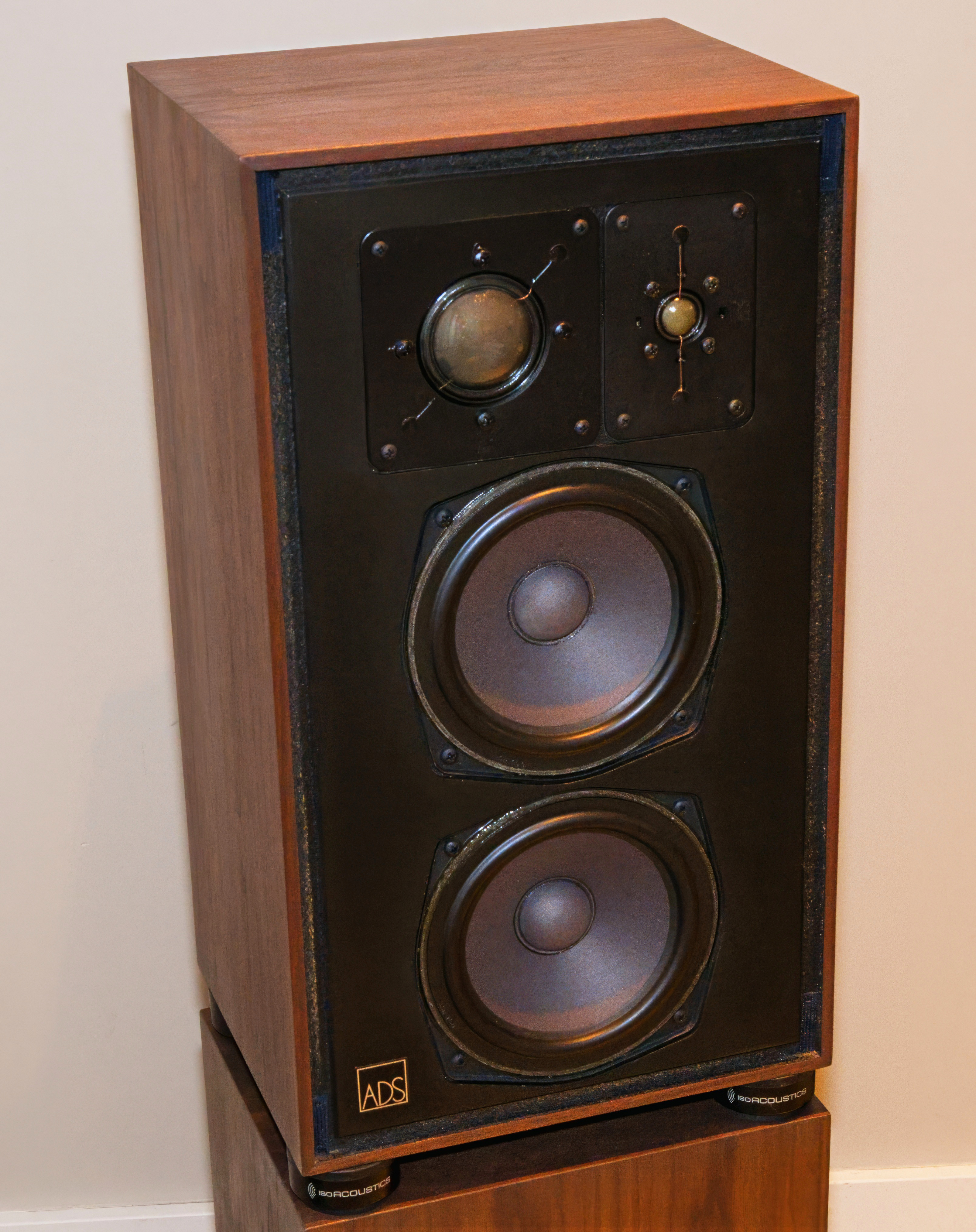
Forward note: the cloth or metal grills on all ADS speakers must be removed when listening as the 3D sound-stage otherwise collapses. Put them back on when not listening to protect the domes from dust and damage.
History
I bought these ADS 710 Series II speakers in 1980 from Sound Plus in Vancouver, Canada when I was in-between 1st and 2nd year electrical engineering school at Queen's U. I was so impressed with the tight, deep, controlled bass from such a modestly sized speaker, plus I loved the soft and accurate sounding dome mid-range and tweeter drivers. I needed a compact speaker system for my constant moves and small rooms that were part of my student life back then and the ADS 710s perfectly fit the bill.
By 3rd year engineering I had saved enough money to power these speakers with a pair of mono-block Kenwood/Trio L-07MIIs (very conservatively rated at 150W each) which really made them sound very authoritative. Playing some Frank Zappa 'One Size Fits All' for friends convinced many of them to buy their own set of ADS speakers.
Eventually in 1995 I changed over to some large Martin Logan hybrid electrostatic SL-3s and put these in storage.
The concept for a restoration/update project
In high school I was really into audio systems and electronics, building a set of large studio monitors and designing and building an active cross-over network for them (which was never implemented because I couldn't afford the tri-amplification). I was also really interested in the 'motion feedback' Philips monitors that not only had tri-amplification but also corrected for woofer excursion errors with an accelerometer in the cone. This was pre-digital DSP but the future was already coming into focus - audio systems would become far more accurate with the advent of direct-drive amplication, active cross-overs and DSP time and frequency domain corrections.
I had some real nostalgia for those ADS L710s and wanted to revisit them so I started down the path of a full restoration and upgrade: refinishing the walnut cabinets, positioning them properly on matching walnut veneered stands (filled with 100lbs of sand and using Iso-Acoustics pucks) so that the mids and tweeters were at ear level, getting the cones and domes re-done by ADS Speaker Repair Services, and providing each driver with 48db/octave cross-overs, its own amplifier and front-end DSP processing to correct for time and frequency domain errors.
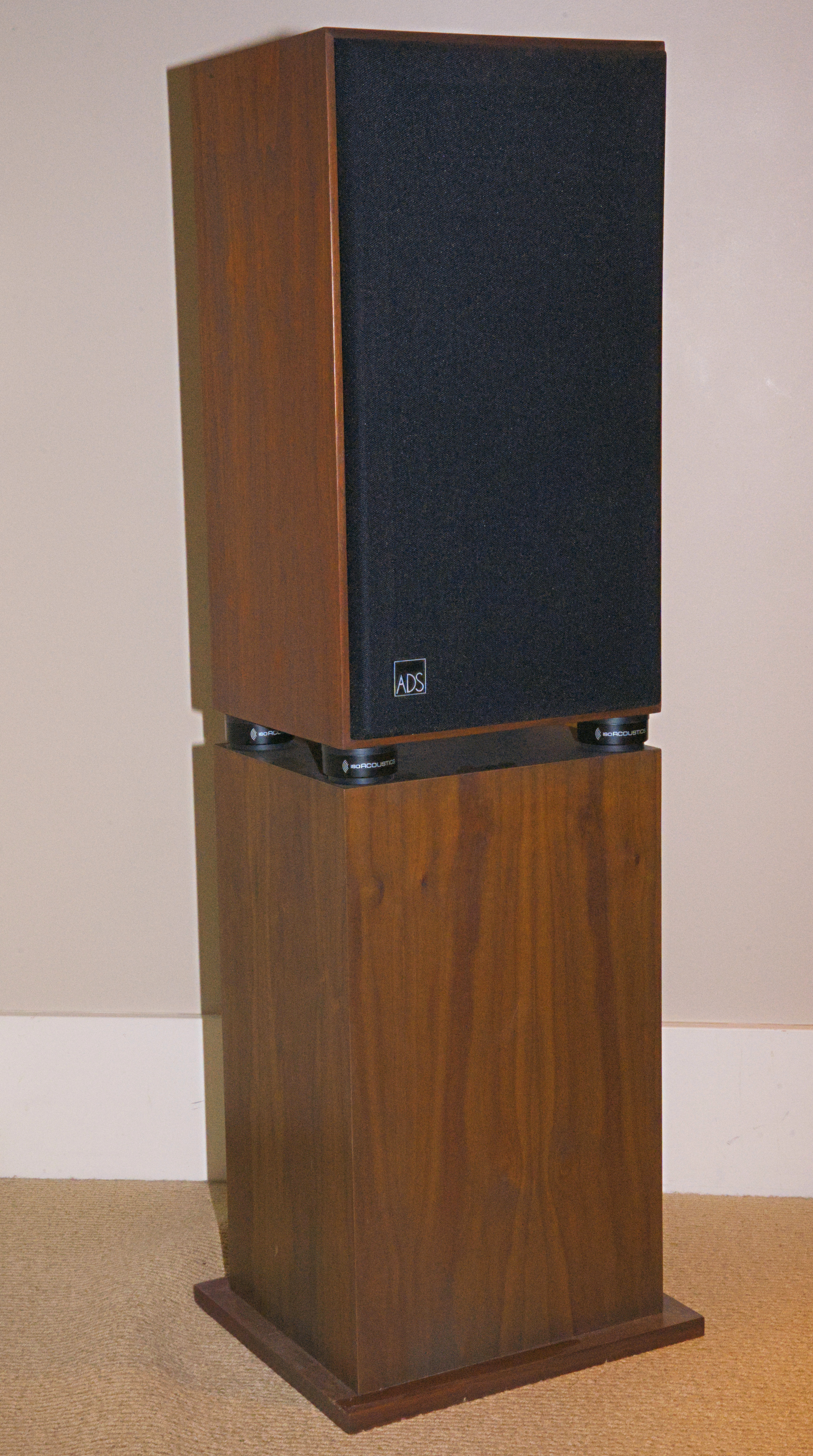
The Powersoft MiniMod-4 modules came with the required DSP front end that handles the cross-overs and processing and 4x150w amplifiers, configured as 1x150w for each mid-range and 1x150w for each tweeter and 2x150w (300w bridged) for the woofers. 48dB cross-overs (vs 12dB for the OEM design) allow for a lower mid-range cross-over point to the woofers (500Hz vs 550Hz OEM) plus they do a better job of keeping the drivers from spilling over into each other's operating ranges, limiting standing wave interactions and improving the 'focus' of the musical presentation. Compensating for the positional differences of the mid-range and tweeter drivers with time delays relative to the woofers also helps. The frequency domain corrections achieve an absolutely flat frequency response from 30-20,000Hz +/-2dB (see graphs below for comparisons to the OEM passive design which is good but far from perfect), and the time domain corrections tighten up the base response so that the bottom end of these speakers is very much the equal of any modern design (the slightly mushy bottom end of the OEM design is replaced by a very precise 'floor' to the music).
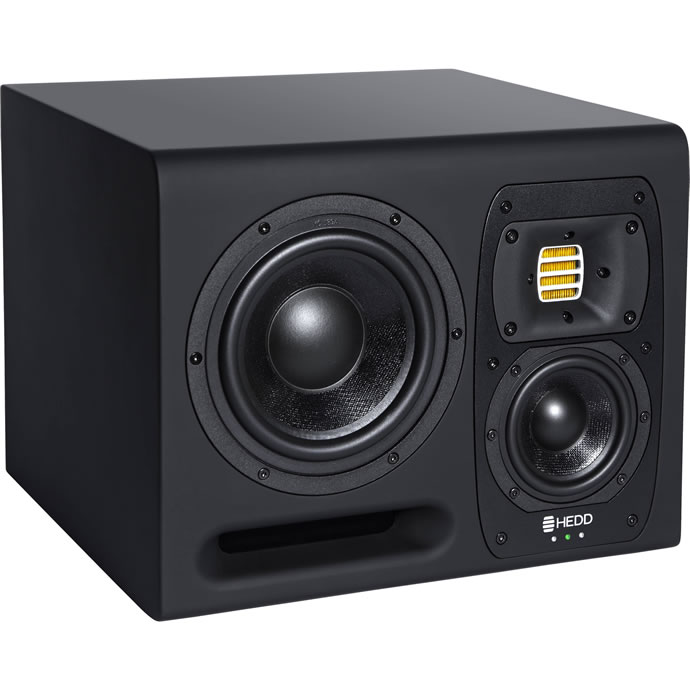
All in all the DSP triamplified L710 'Series 3' speakers now sound incredibly accurate and neutral. The dome mid-range drivers in particular provide for a fantastic presentation of voices and instruments that many other speaker designs cannot equal. Side by side comparisons with state-of-the-art HEDD 20 studio monitors show them to be more musical and enjoyable speakers (studio monitors are not intended to be 'enjoyable' - rather they are supposed to show any imperfections in the mix). I can listen to pretty much any speaker I want to and have enjoyed many different designs in my lifetime and find these 'updated' ADS L710s ideal for my taste. No sub-woofers required. And yes, they can play very loud if desired with low distortion.
My high-school dream of electronically corrected, tri-amplified speakers finally became a reality 5 decades later ...
A video summarizing the project: ADS 710 S3 Project Review
PowerSoft MiniMod-4 DSP Module Programming
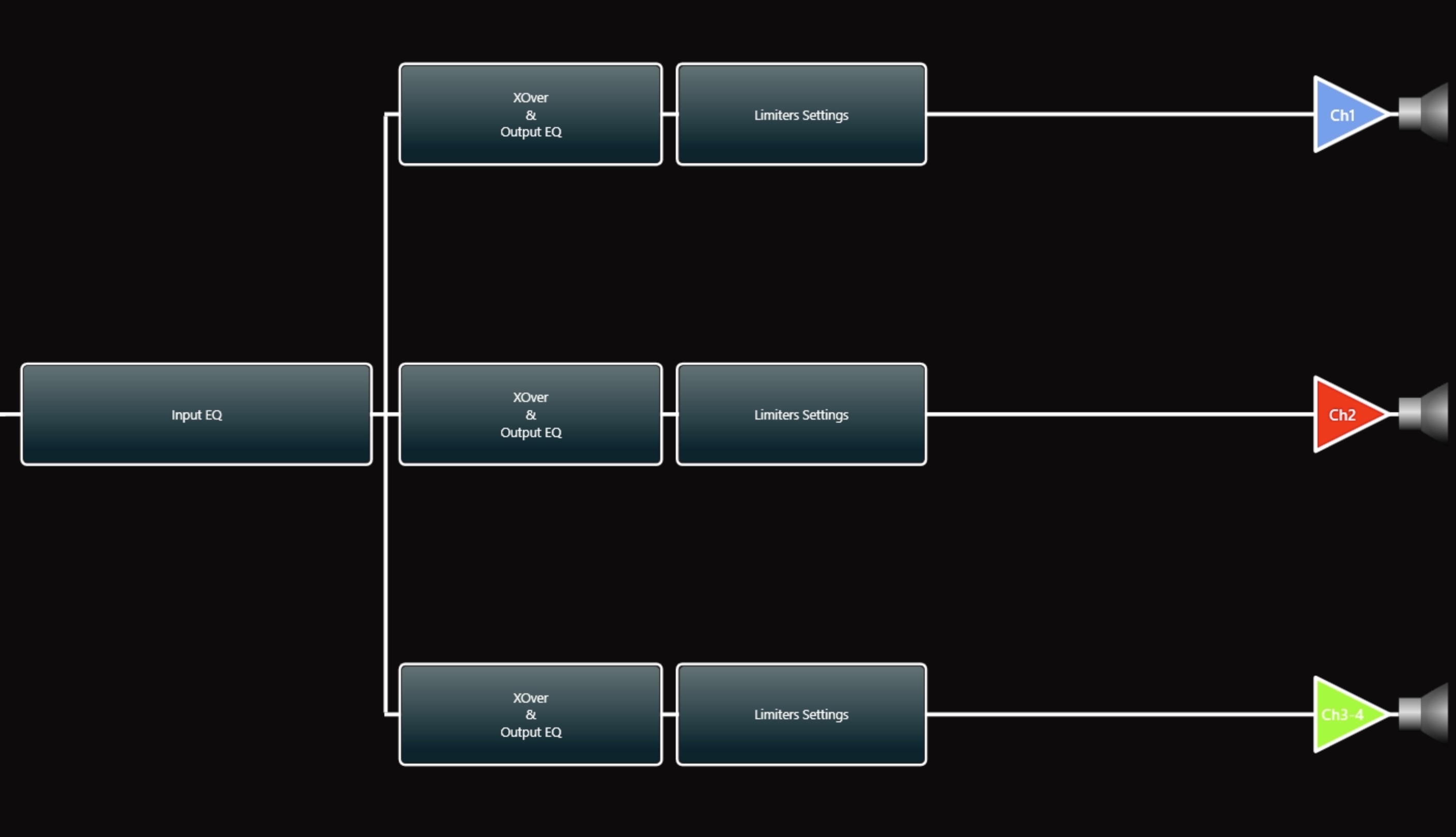
DSP block diagram for the 48dB/octave cross-overs, then time and frequency domain corrections for each driver, then 1 amplifier per tweeter and midrange, 2 amplifiers bridged for the woofers
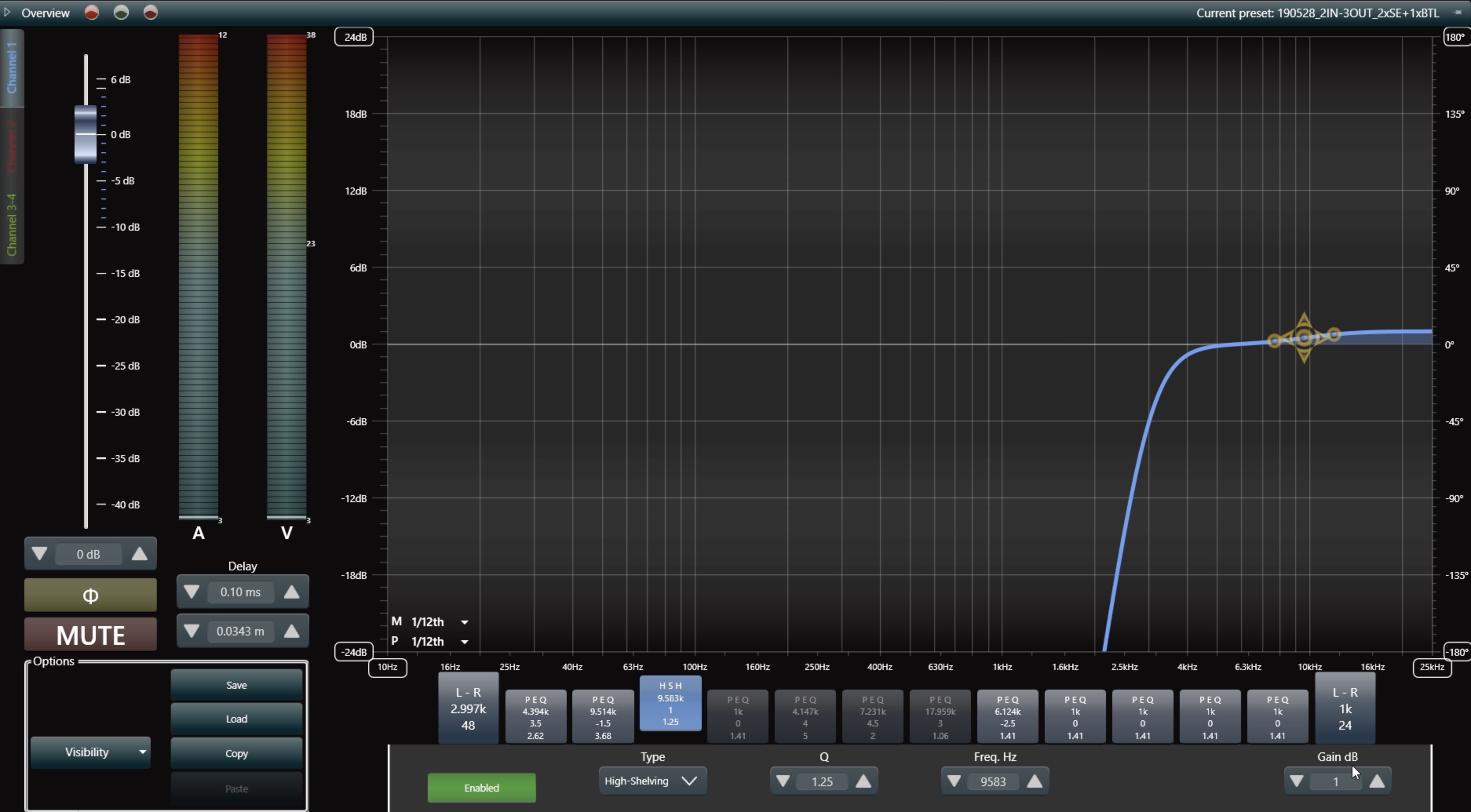
Initial DSP programming for the tweeters - note, I reduced the top end by 1dB after extensive listening evaluations to soften things up a bit
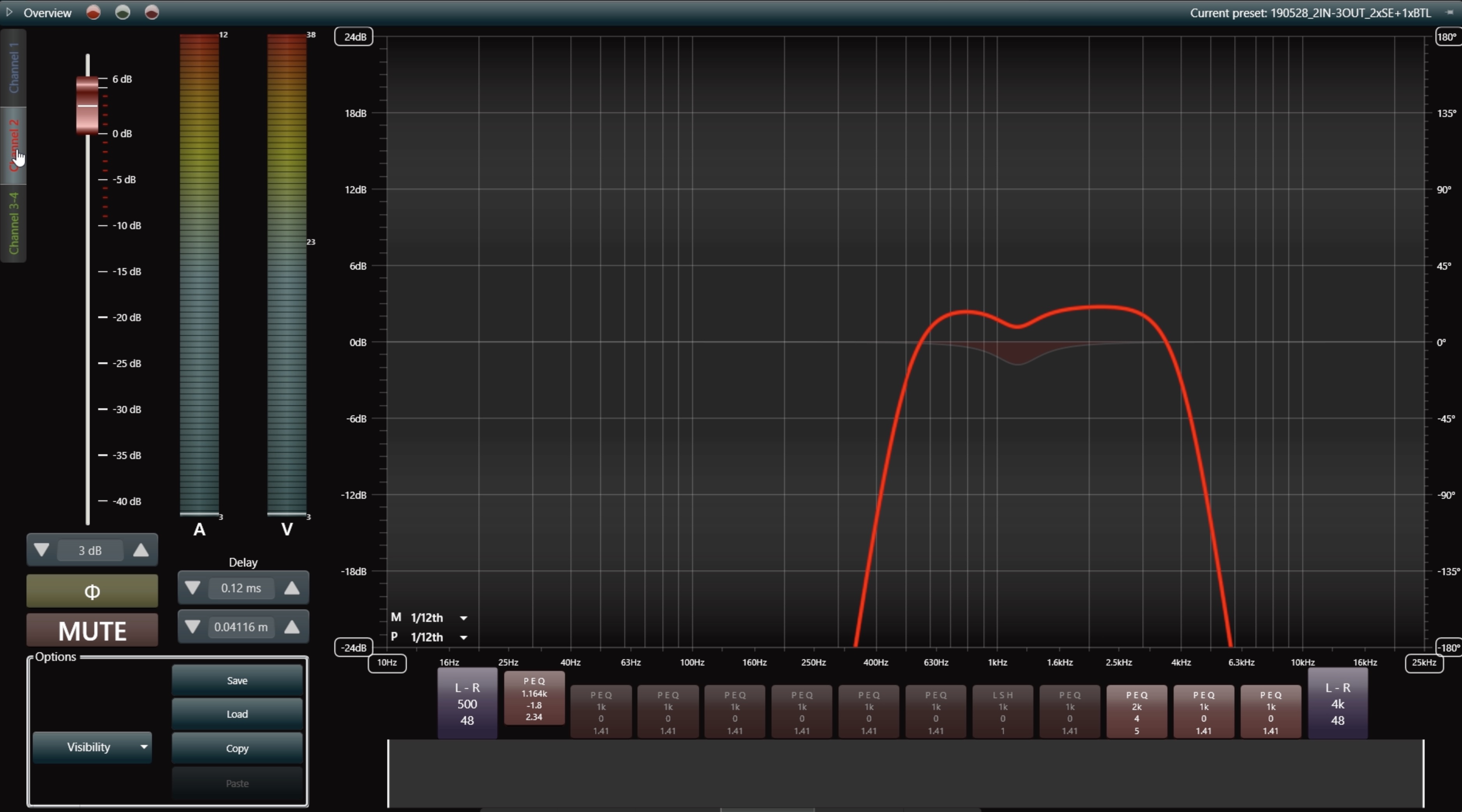
Mids programming
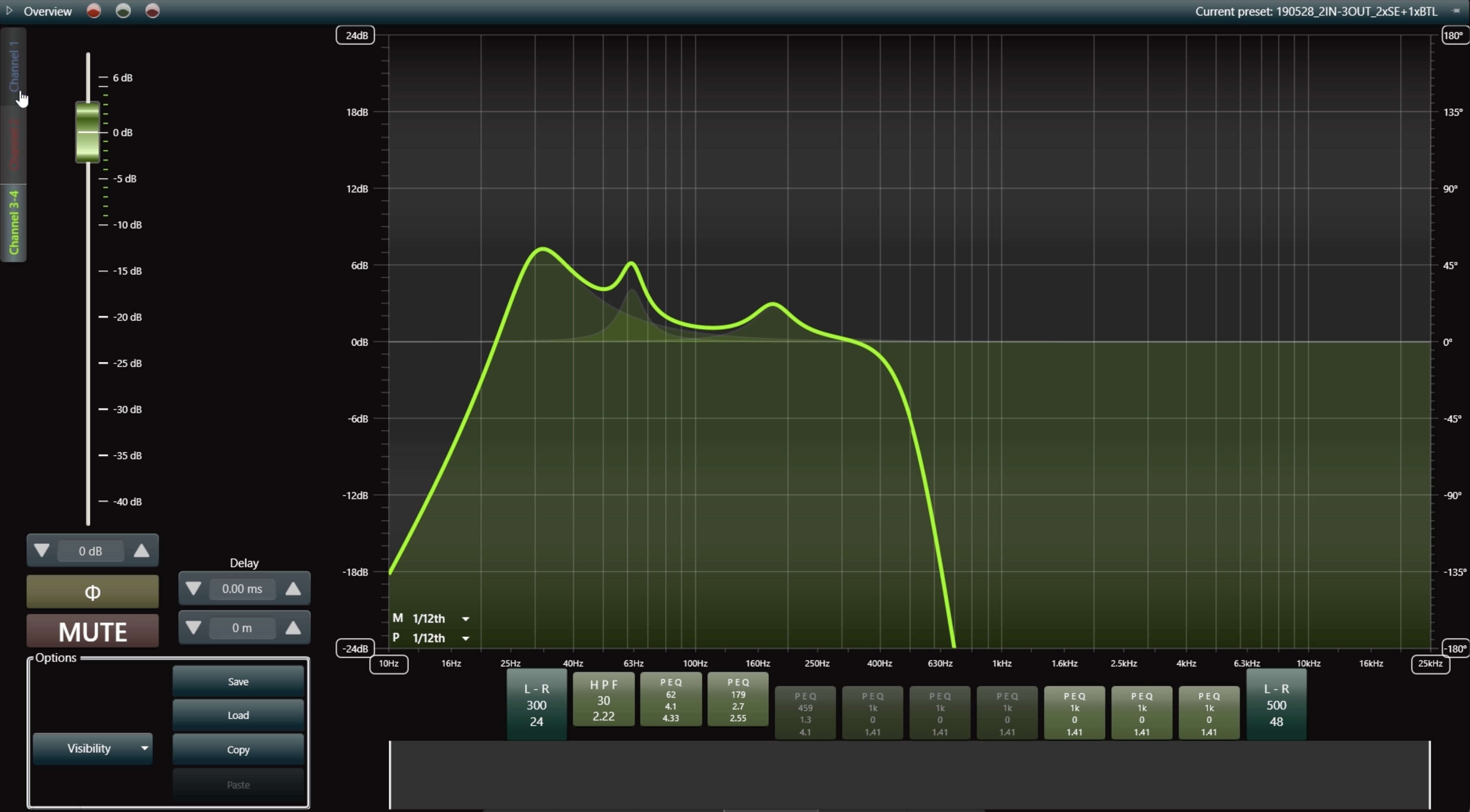
Woofers programming
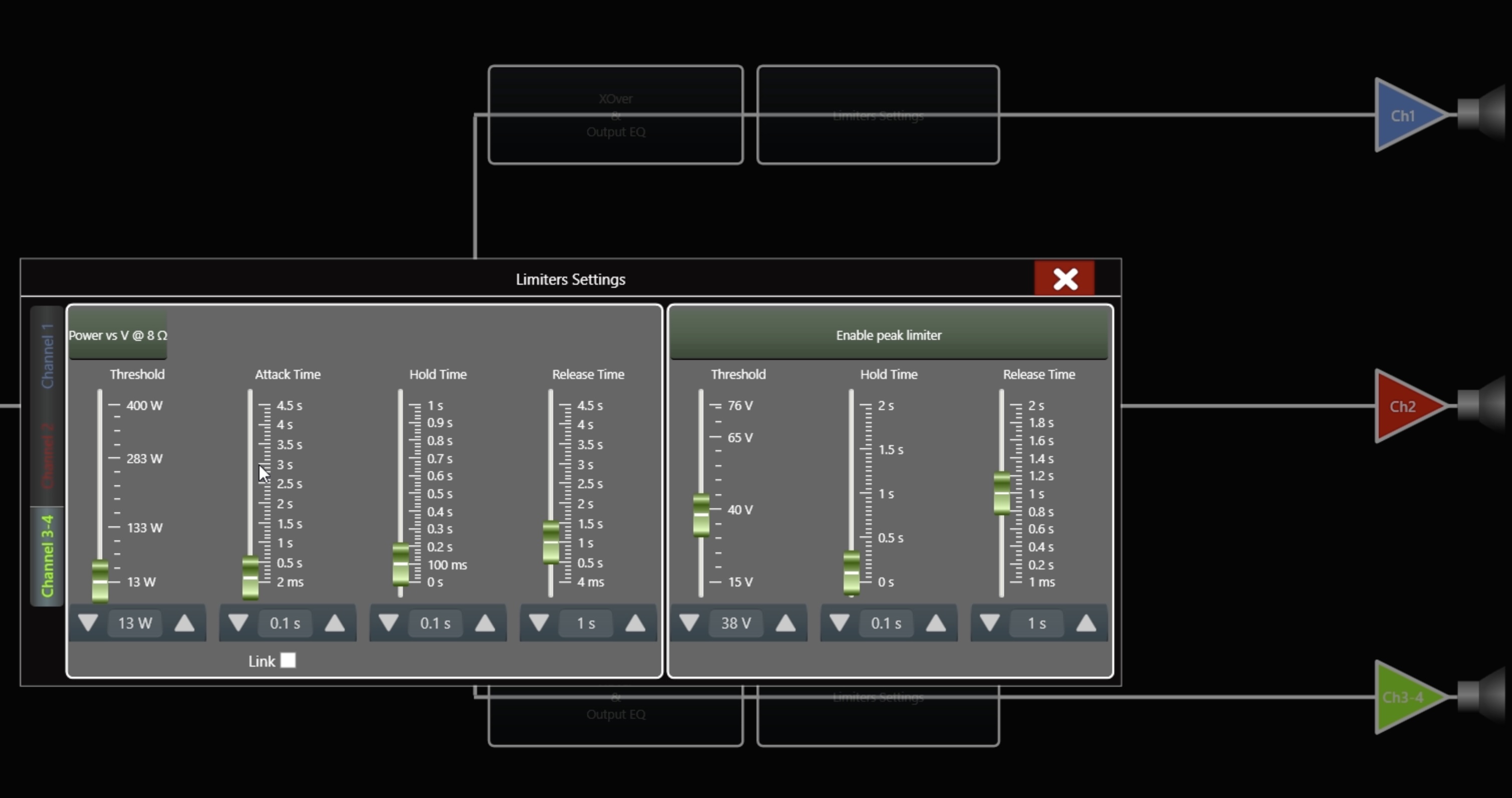
Example of power limiting/protection programming for each driver
Measurements
MiniDSP UMIK-1 calibrated Microphone used for all measurements. REW software utilizied.
Individual mid-range and tweeter driver measurements made with acoustic baffling to eliminate room coupling & reflections
 Freq Response L.jpg)
The OEM ADS L710 speaker room frequency response using their passive cross-overs (with grill attached - which dramatically rolls off the top end) - ignore the <200Hz section as this is bass coupling to the room acoustics. The dip in the lower mid-range is real as is the upper mid-range peak - you can hear this when listening to the original speakers
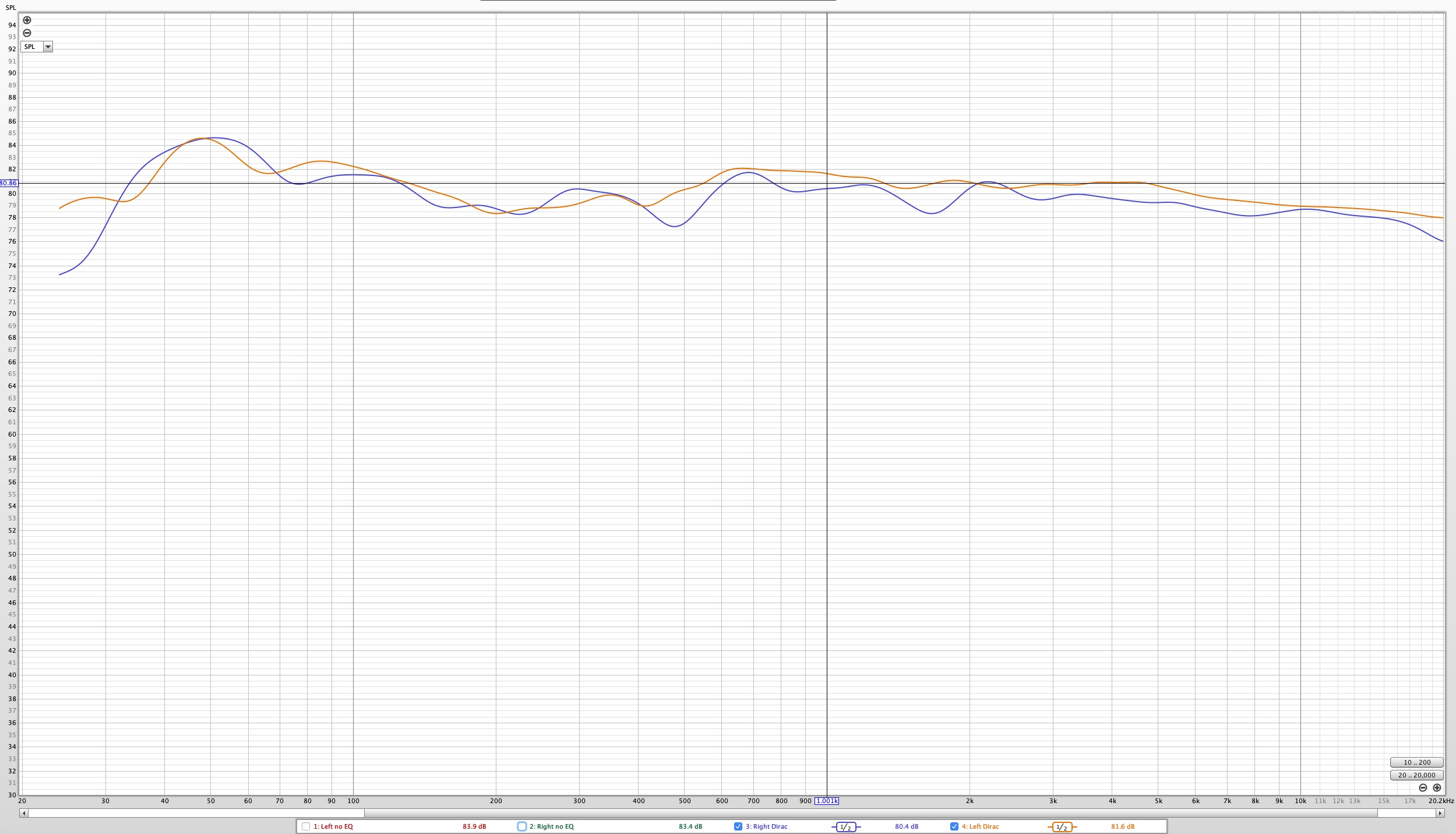
The upgraded DSP version of the ADS L710 speakers frequency response - with a deliberate +2dB boost in the low end <80Hz and a -1.5dB rolloff on the high end, which suits my listening tastes (flat 30-20,000Hz +/-2dB) - no grill
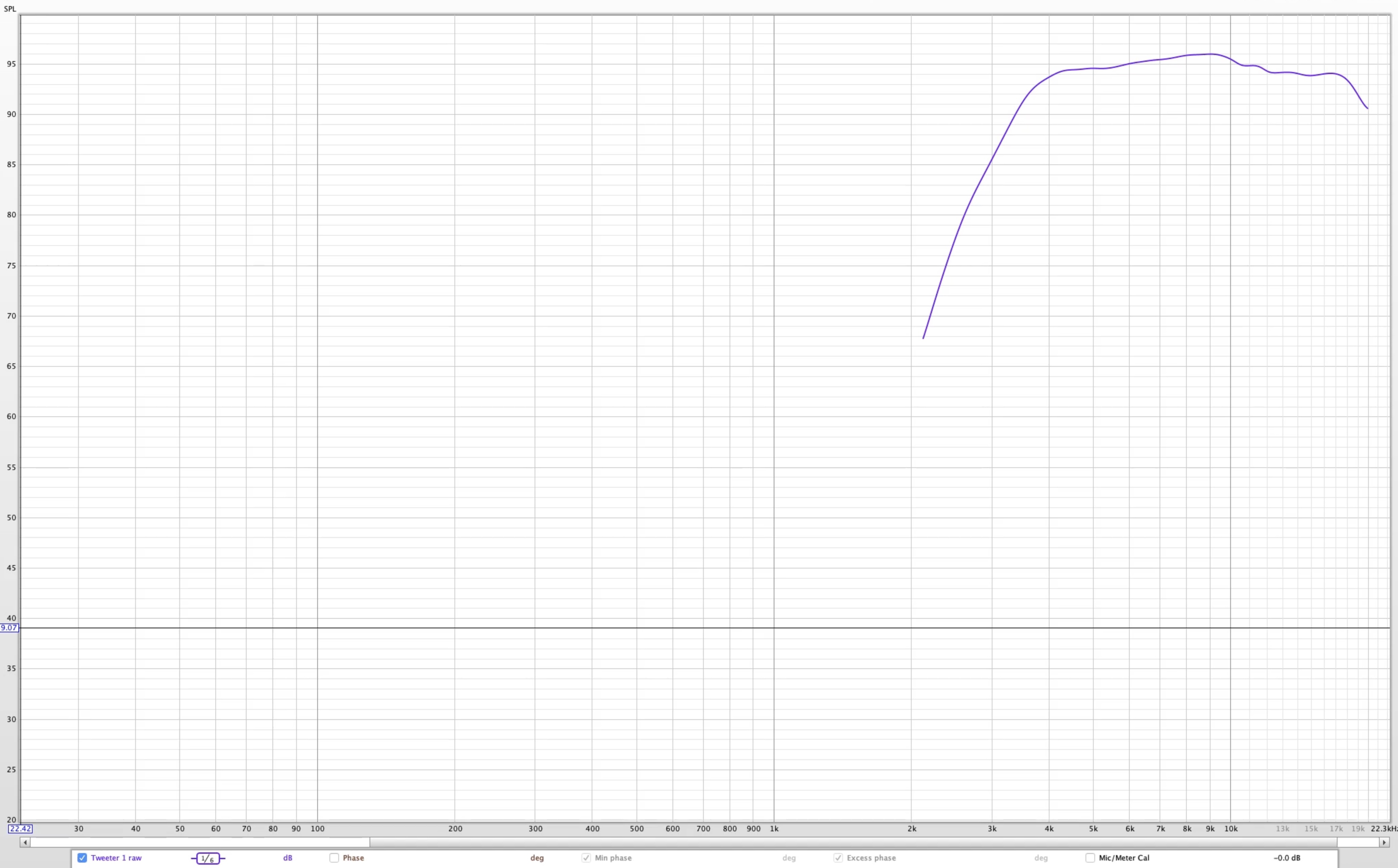
Tweeter with 48dB cross-over but no EQ
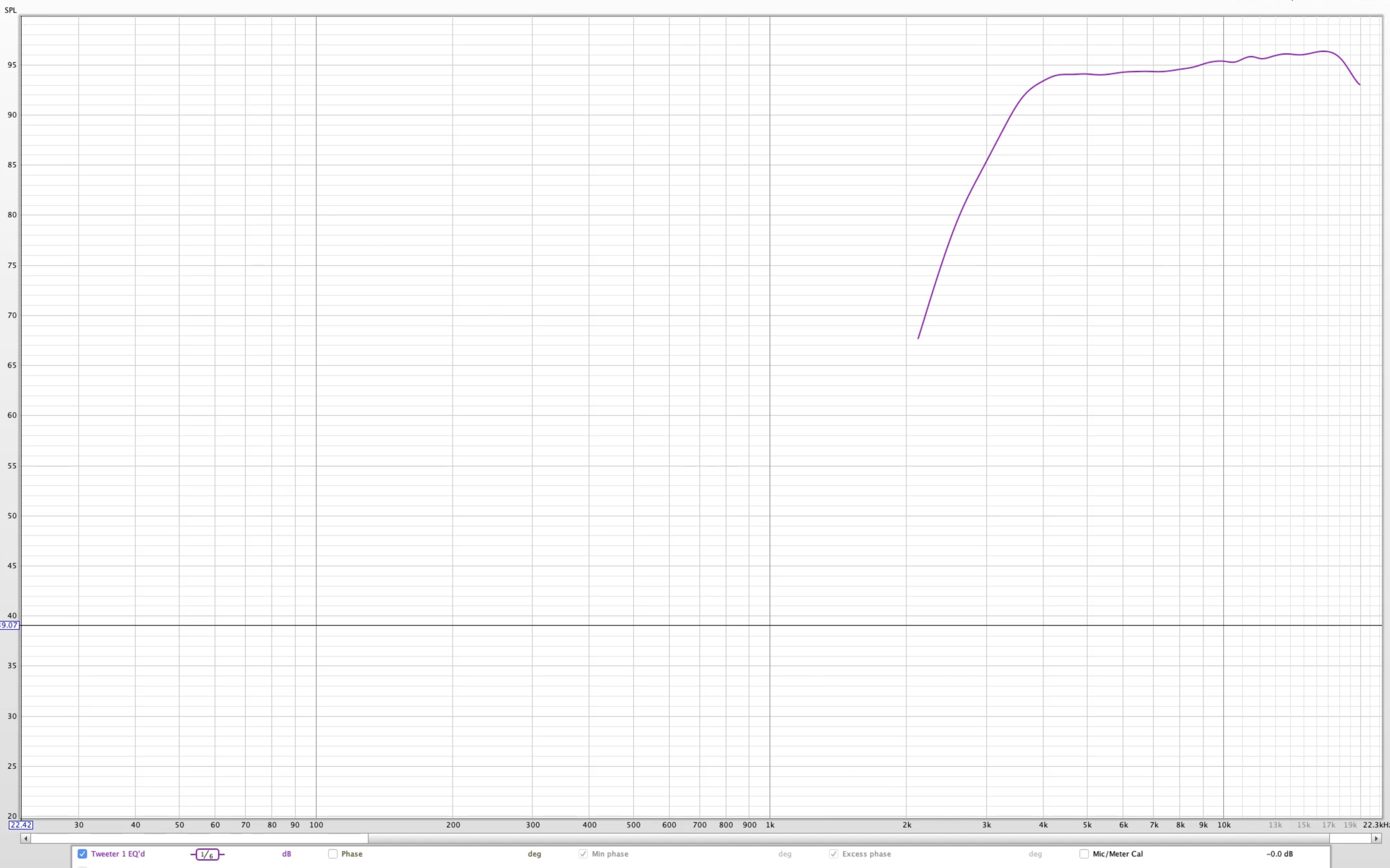
Tweeter with EQ added (initial programming included a +1dB top end which eventually was altered to a -1.5dB rolloff)
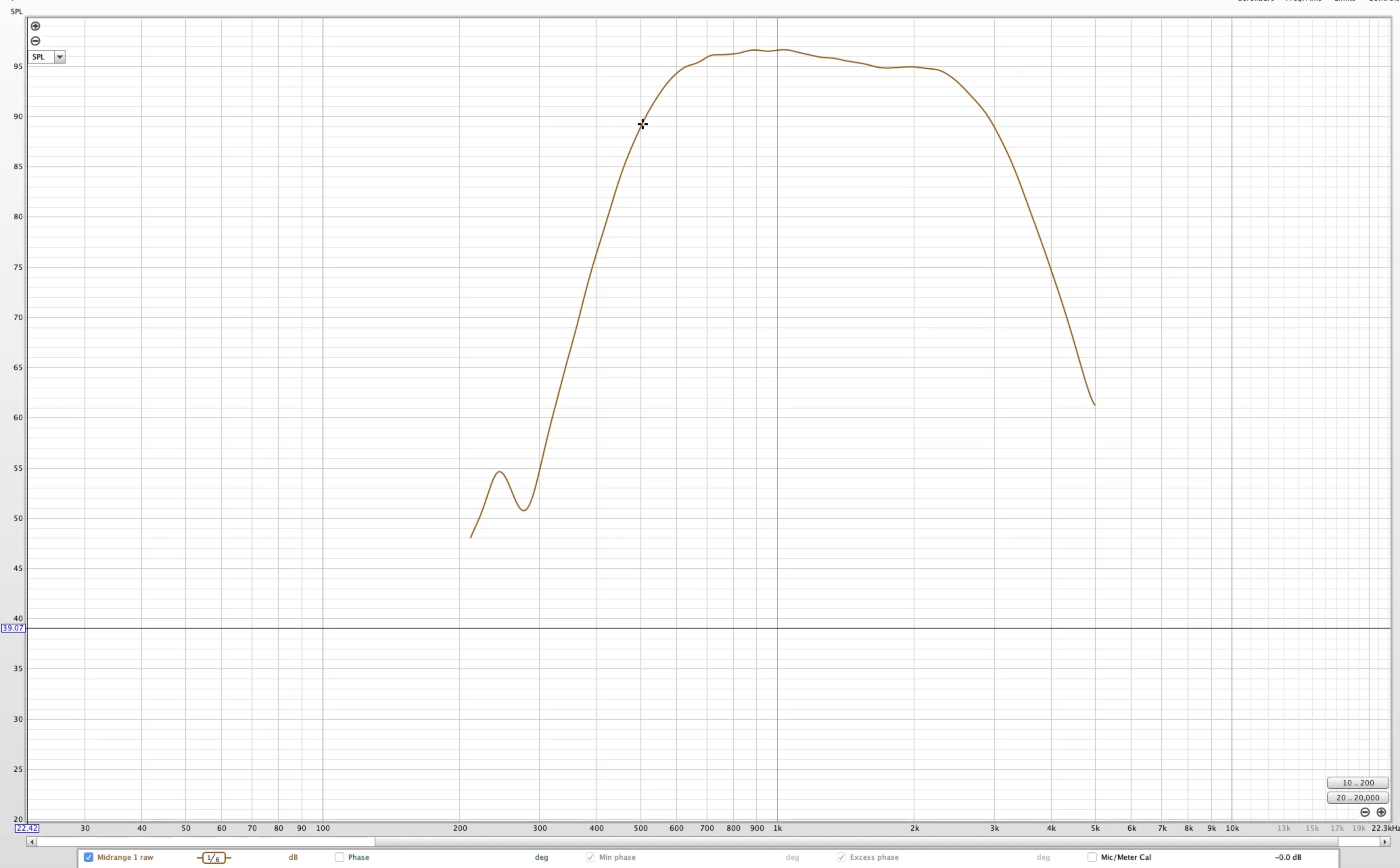
Mids with with 48dB cross-over but no EQ
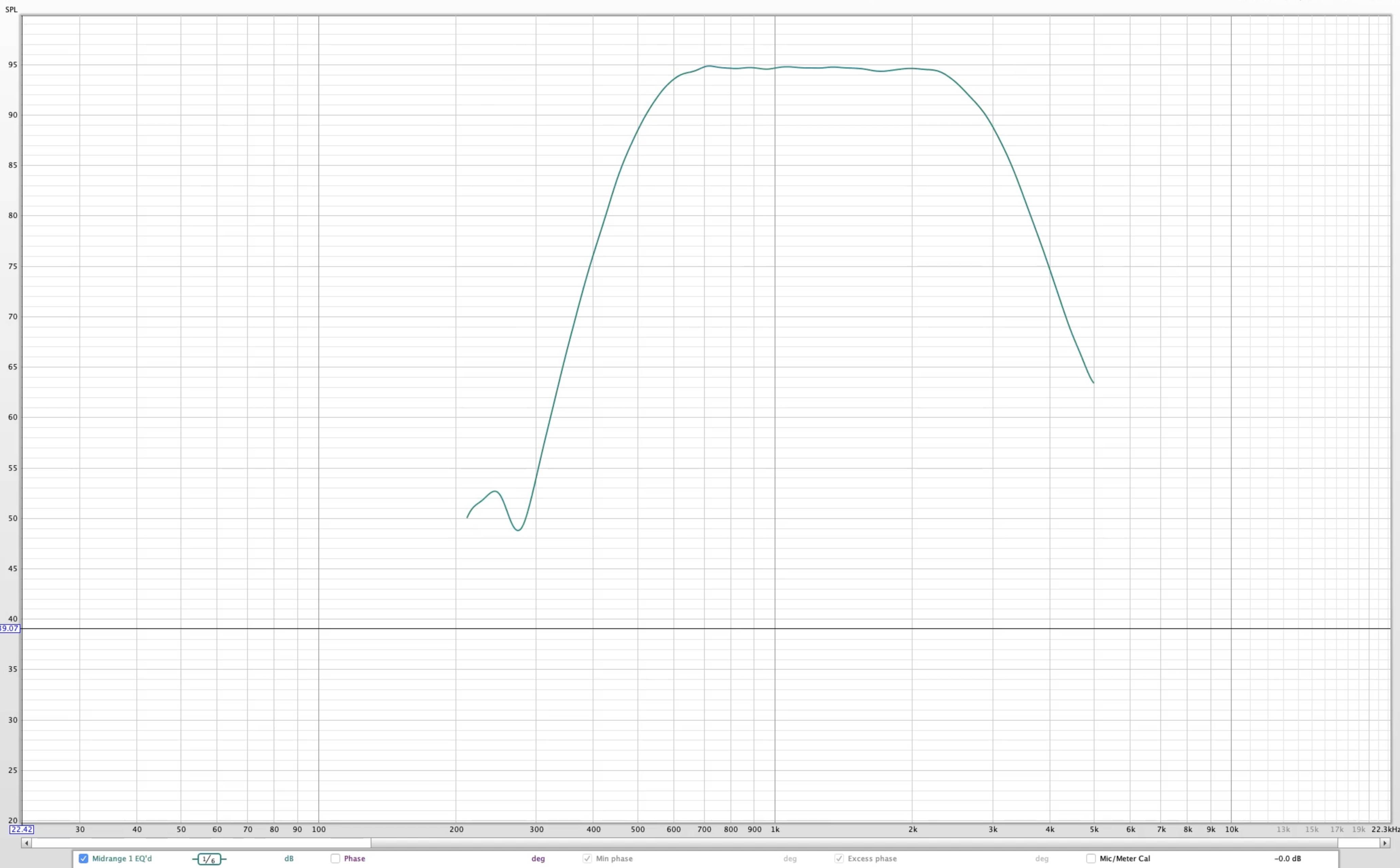
Mids with EQ added
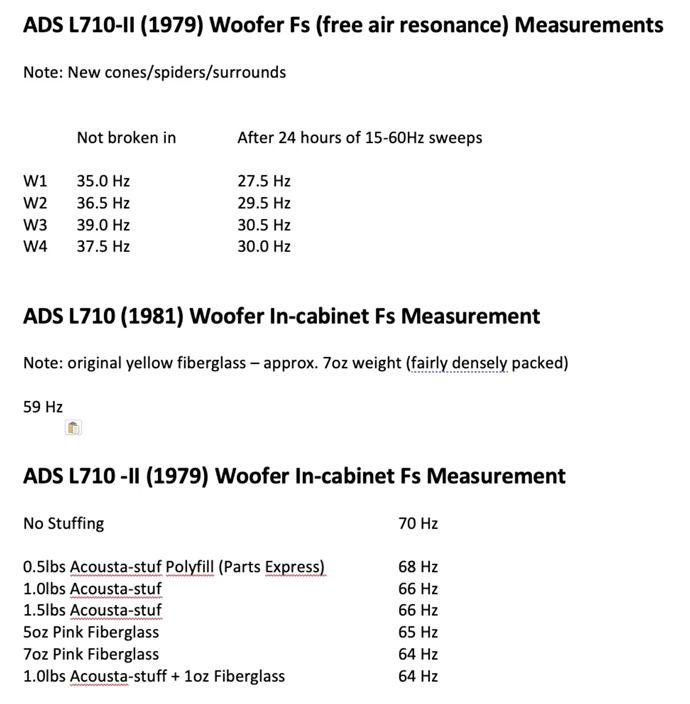
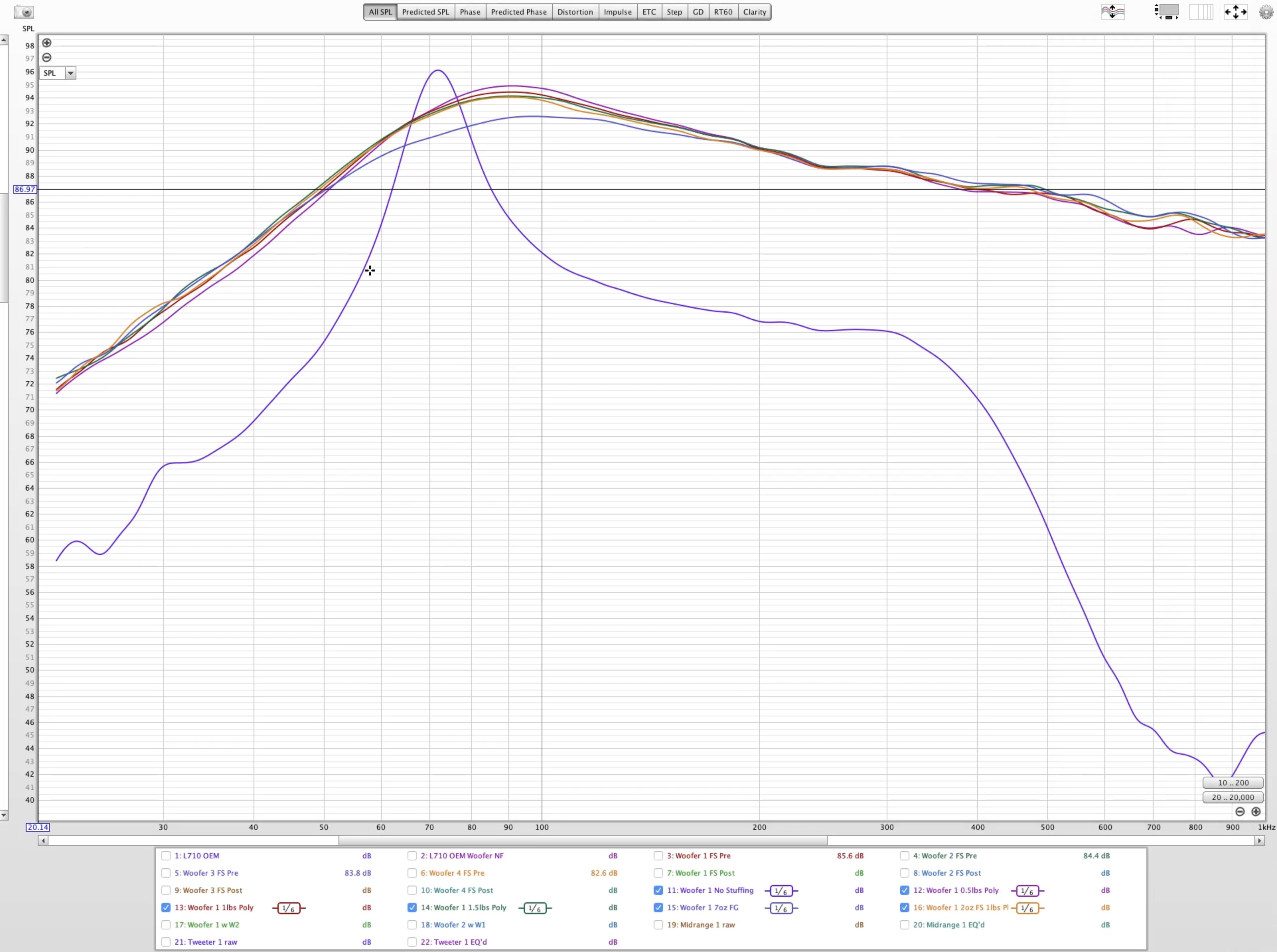
Choosing the optimal amount and type of stuffing for the woofers. The OEM woofers were 40 years old and were obviously a lot more 'broken in' than the re-coned versions which take time to fully break-in.
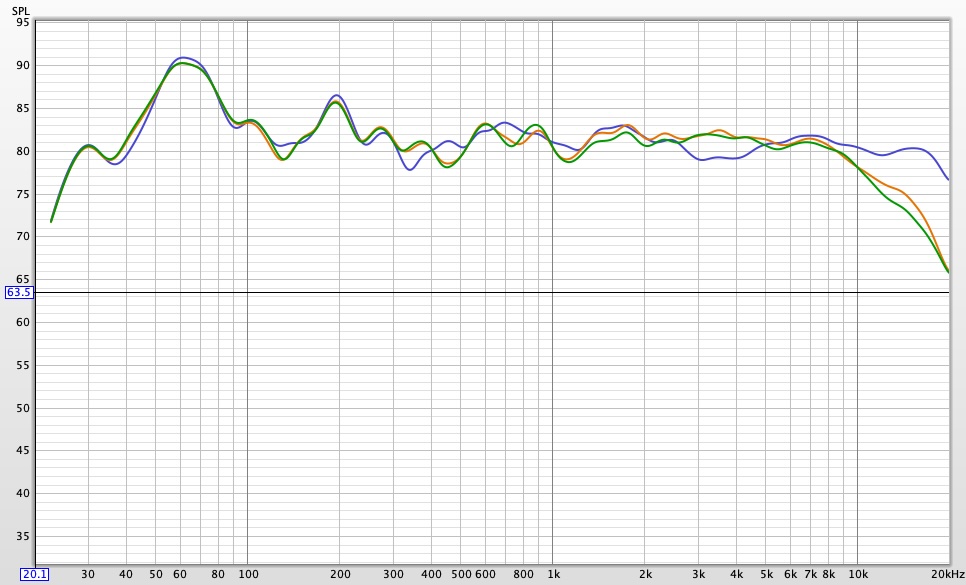
Off-Axis response - Ignore the low end - this is an analysis of the off-axis rolloff at 30 and 45 degrees
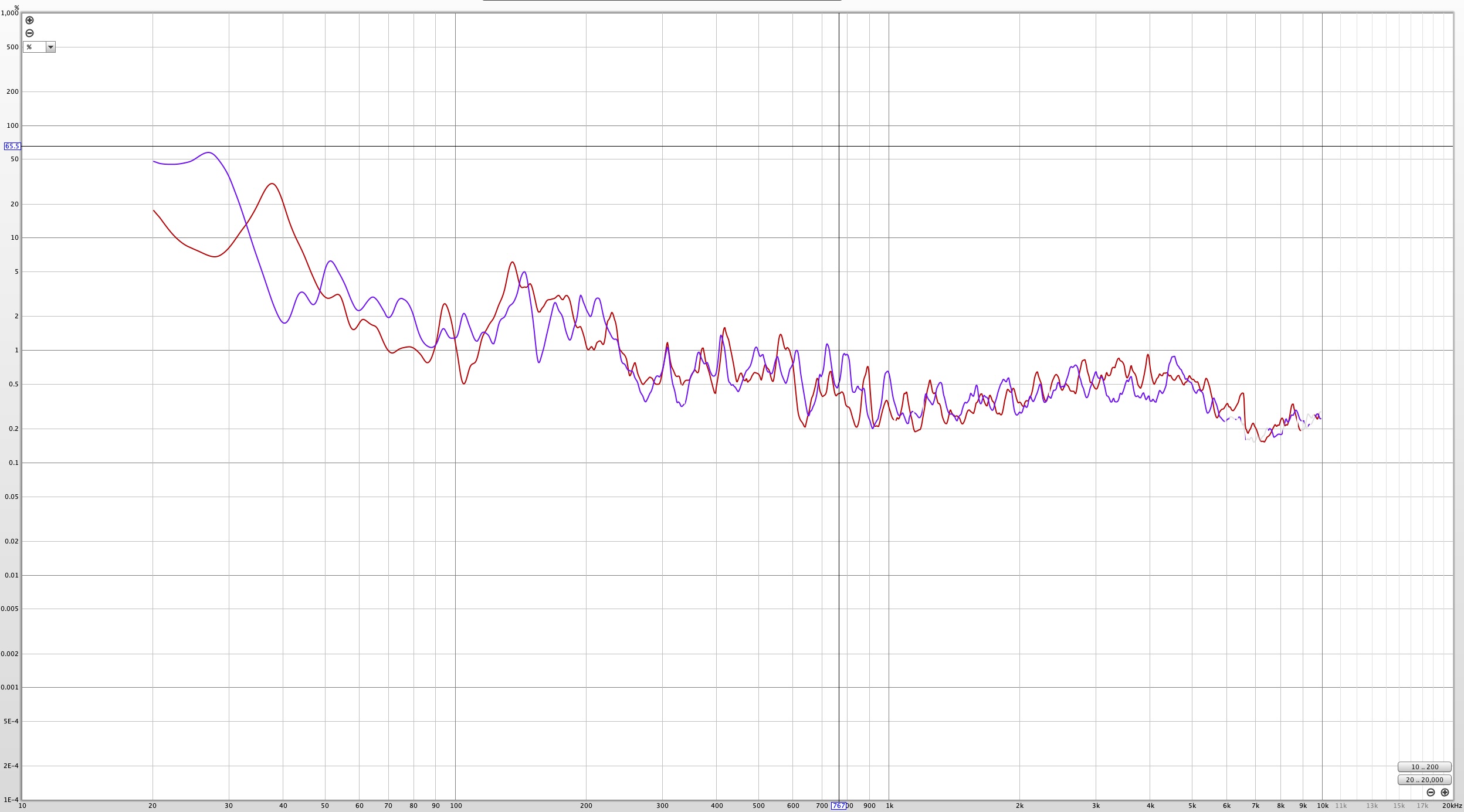
THD averaging 0.3% at 85dB/1m listening levels >1kHz - this is comparable to modern monitors
ADS/Braun Brochures & Documents
ADS L710 Speakers Brochure (1975)
ADS L810 Speakers Brochure (1975)
ADS 700 Speakers Brochure(1976)
ADS L810 Speakers Brochure (1977)
Braun Speakers Brochure (1977)
ADS L810 Speakers FM Guide Review (1977)
ADS L810 Speakers Stereo Review (1977)
ADS 710 II Speakers Brochure (1979)
ADS Professional Monitors Brochure (1980)
ADS L710 & L810 Speakers Brochure (1981)
ADS Cross-over schematics (1982)